Optimize Your Formwork Projects!

Unlock expert insights on aluminium formwork systems and concrete casting workflows. Subscribe for cutting-edge technical guidance.

Aluminum Formwork Load Behavior Study


Structural Behavior Analysis of Aluminum Formwork Under Concrete Load Conditions

Posted on: 2026-02-11
By: Liam Marston


What if a single choice in your construction project could lead to significant time and cost savings? Understanding the structural behavior of aluminum formwork under concrete load is that pivotal decision. Let's dive into the key insights that will empower your next build.

What You Will Learn

  • Aluminum formwork is highly versatile and ideal for various applications, including residential, commercial, and infrastructure projects.
  • Analyzing structural behavior under load conditions is critical for safety assurance, design optimization, and cost efficiency.
  • Key material properties of aluminum, such as lightweight design and corrosion resistance, contribute to enhanced construction performance.
  • Dynamic load analysis is essential for developing resilient formwork designs that can adapt to changing loads during construction.
  • Conducting load path analyses helps identify weaknesses and optimize the design, leading to improved structural integrity and safety on-site.

Key Aspects of Aluminum Formwork Behavior

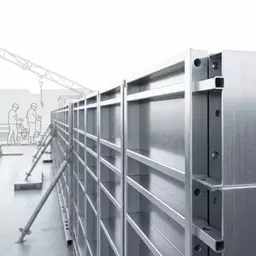
This visual outlines the critical factors in understanding aluminum formwork's structural performance under concrete load. It highlights material properties, dynamic load considerations, and load path analysis, crucial for optimal design and safety.

Material Properties of Aluminum

  • Lightweight
  • Corrosion Resistance
  • High Strength-to-Weight Ratio

Dynamic Load Considerations

  • Expected Load Variations
  • Flexibility in Design
  • Simulation for Reactions

Load Path Analysis Steps

  • Mapping All Load Paths
  • Identifying Weak Points
  • Modeling Load Distribution

Applications of Aluminum Formwork

  • Residential Buildings
  • Commercial Projects
  • Infrastructure

Understanding Structural Behavior of Aluminum Formwork Under Concrete Load

When it comes to modern construction, understanding the structural behavior of aluminum formwork under concrete load is essential. Aluminum formwork systems have become increasingly popular due to their efficiency and adaptability in various construction scenarios. By analyzing how these systems react when subjected to loads, we can improve safety, reduce costs, and enhance overall project outcomes. For a comprehensive look at how different materials behave under stress, the Elsevier ScienceDirect platform offers valuable insights into structural behavior across various engineering disciplines.

In this section, we'll explore the applications of aluminum formwork and the significance of analyzing its structural behavior under load conditions. This knowledge not only helps in selecting the right system but also empowers builders and contractors to make informed decisions during project planning.

Overview of Aluminum Formwork and Its Applications in Construction

Aluminum formwork is a highly versatile system used primarily for creating concrete structures. Its lightweight yet durable design allows for easy handling and rapid assembly. Here are some key applications:

  • Residential Buildings: Ideal for multi-story residential construction, providing a smooth finish and reduced curing times.
  • Commercial Projects: Efficient for large-scale commercial developments, ensuring uniformity and quality in concrete slabs.
  • Infrastructure: Used in bridges and other infrastructure projects where strength and durability are crucial.

By using aluminum formwork, teams can achieve faster construction cycles, which leads to significant time and cost savings. As someone deeply invested in the construction industry, I've witnessed firsthand how these systems can transform workflows and enhance project outcomes.

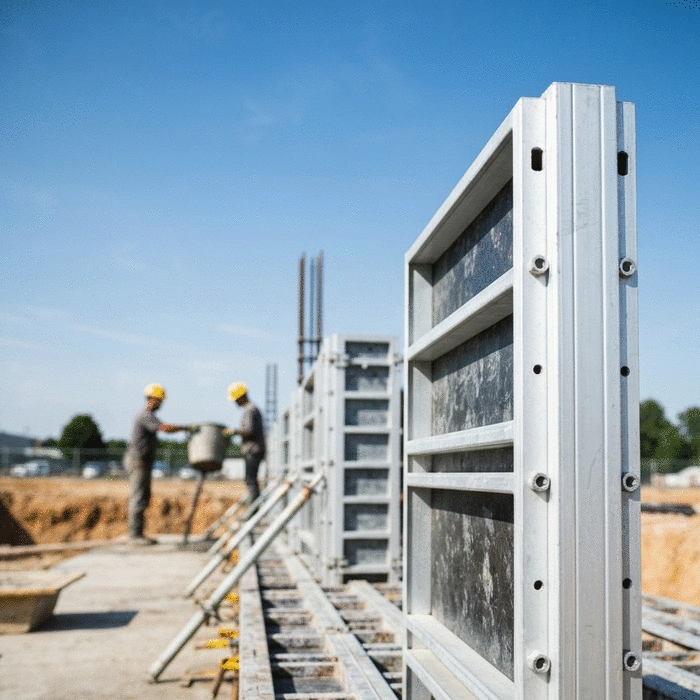
Detailed aluminum formwork structure during a concrete pour on a construction site, no text, no words, no typography, clean image

Importance of Analyzing Structural Behavior Under Concrete Load Conditions

Understanding how aluminum formwork behaves under concrete loads is vital for several reasons. It allows engineers to predict performance, identify potential issues, and enhance safety. Here are some key reasons why this analysis is critical:

  • Safety Assurance: Ensuring that the formwork can withstand loads prevents accidents and structural failures.
  • Design Optimization: Insights gained can lead to better design choices that enhance load-bearing capabilities.
  • Cost Efficiency: Understanding load behavior helps in reducing material waste and optimizing resource allocation.

As professionals in the construction field, we need to prioritize these analyses to ensure that our projects meet safety standards while maximizing efficiency. Further reading on the importance of structural analysis in construction can be found via the American Society of Civil Engineers (ASCE), which highlights critical considerations for ensuring structural integrity.

Key Material Properties of Aluminum in Construction

Aluminum's unique properties make it an excellent choice for formwork systems. Understanding these properties is crucial for builders and engineers alike. Here are the standout characteristics:

  • Lightweight: Aluminum is significantly lighter than steel, making it easier to handle and transport.
  • Corrosion Resistance: This property ensures that aluminum formwork maintains integrity over time, even in challenging environments.
  • High Strength-to-Weight Ratio: Aluminum provides the strength needed to support concrete loads without the bulk.

These properties contribute to the overall functionality and efficiency of aluminum formwork systems, making them a reliable choice for various construction applications. With my experience in the industry, I can attest to the benefits that come with using aluminum as a primary material for formwork systems. For more detailed information on aluminum's properties and applications, the Aluminum Association provides extensive resources and data.

Engage with Us!

As we continue to explore the importance of aluminum formwork in construction, we want to know your experiences! What challenges have you encountered when using aluminum formwork systems? Share your insights below:

Practical Applications and Case Studies in Structural Behavior Analysis

In the field of construction, the practical applications of aluminum formwork systems can significantly enhance project efficiency and safety. By analyzing real-world case studies, we can better understand how these systems perform under load conditions. At Aluminium Formwork Online, we aim to provide valuable insights that empower builders and engineers to make informed decisions about formwork systems.

For instance, in a recent high-rise residential project, the use of aluminum formwork allowed for accelerated construction timelines while maintaining structural integrity. Such examples illustrate the effectiveness of aluminum formwork in various load scenarios and its adaptability to different project requirements.

Real-World Examples of Aluminum Formwork Under Load Conditions

  • A commercial building project in downtown experienced significant savings in construction time due to aluminum formwork's lightweight design.
  • An infrastructure project utilized aluminum panels to support heavy concrete loads, showcasing the formwork's robust performance.
  • In residential constructions, aluminum formwork has proven to withstand varying weather conditions while maintaining its shape and structural capabilities.

These case studies highlight the versatility of aluminum formwork systems, demonstrating their effectiveness across different types of construction projects. By reviewing such instances, builders can glean insights into best practices and potential challenges.

Engineers reviewing blueprints with a background of aluminum formwork on a construction site, no text, no words, no typography, clean image

Dynamic Load Considerations and Their Impact on Design

Understanding dynamic loads—those that change over time—is crucial when designing aluminum formwork systems. These loads can arise from factors like environmental conditions, equipment usage, and construction activities. By incorporating dynamic load analysis, teams can develop formwork designs that are both functional and resilient.

Some of the key considerations include:

  • Identifying the expected load variations during construction phases.
  • Incorporating flexibility in the formwork design to accommodate changes.
  • Conducting simulations to predict how the formwork will react under different load scenarios.

By addressing these aspects, we can enhance the overall stability and performance of the aluminum formwork system, ensuring it meets the demands of the construction environment.

Load Path Analysis for Enhanced Structural Performance

Another vital aspect of structural behavior analysis is load path analysis. This process helps identify how loads are transferred through the formwork system and into the underlying structure. By understanding these paths, we can pinpoint potential weaknesses and optimize the design accordingly.

Key steps in conducting a load path analysis include:

  • Mapping out all load paths from the top of the structure to the foundation.
  • Identifying points of potential failure or overload.
  • Using software to model and assess load distribution across the formwork.

Such thorough analyses not only bolster the structural integrity of the construction but also enhance safety standards on-site, leading to more reliable project outcomes.

Frequently Asked Questions About Aluminum Formwork Behavior

Q: What makes aluminum formwork versatile for different construction projects?
A: Aluminum formwork is versatile due to its lightweight nature, high strength-to-weight ratio, and durability, making it suitable for residential, commercial, and infrastructure constructions. Its ease of handling and rapid assembly also contribute to faster construction cycles.
Q: Why is it important to analyze the structural behavior of aluminum formwork under concrete load?
A: Analyzing structural behavior is critical for safety assurance, preventing accidents and structural failures. It also aids in design optimization, leading to better load-bearing capabilities, and promotes cost efficiency by reducing material waste.
Q: What are the key material properties of aluminum that make it ideal for formwork?
A: Key properties include its lightweight nature (easier handling and transport), excellent corrosion resistance (maintains integrity over time), and a high strength-to-weight ratio (supports concrete loads without excessive bulk).
Q: How do dynamic load considerations impact aluminum formwork design?
A: Dynamic load considerations, such as variations from environmental conditions or construction activities, require formwork designs that are flexible and resilient. This involves identifying expected load variations, incorporating adaptability into the design, and using simulations to predict reactions under different scenarios.
Q: What is load path analysis, and why is it important for structural performance?
A: Load path analysis is the process of identifying how loads are transferred through the formwork system. It's crucial for structural performance because it helps pinpoint potential weaknesses, optimize design, and ensure that loads are distributed effectively, thereby enhancing structural integrity and on-site safety.

Recap of Key Points

Here is a quick recap of the important points discussed in the article:

  • Aluminum Formwork Versatility: Ideal for residential, commercial, and infrastructure projects due to its lightweight and durable design.
  • Safety Assurance: Analyzing structural behavior under loads ensures safety and prevents accidents.
  • Design Optimization: Insights into load behavior can lead to better design choices and enhance load-bearing capabilities.
  • Dynamic Load Considerations: Incorporating flexibility and simulations into design improves resilience against changing loads.
  • Load Path Analysis: Identifying load paths helps optimize design and enhances structural integrity.

Subscribe & Share
Optimizing Cycle Time with Aluminum Cycle Time Optimization Techniques Using Aluminum Formwork Systems What if you could transform your construction projects simply by optimizing your workflow? Cycle tim
Productivity Strategies in Aluminium Formwork Top Productivity Improvement Strategies in Aluminium Formwork Construction In a world where construction efficiency is paramount, the introduction of aluminum formwork is revo
Aluminium Formwork Installation Tools Guide Essential Tools and Equipment for Efficient Aluminium Formwork Installation What if you could streamline your construction process while enhancing quality? With aluminium formw
Banner
Aluminium Formwork Online

Your go-to resource for mastering aluminium formwork systems. We help builders, contractors, and engineers with technically sound guidance and practical insights for superior project outcomes.

Trusted by industry professionals, our mission is to provide reliable, easy-to-follow insights backed by extensive engineering expertise and modern construction standards.

Learn More
Recent Posts
Cycle Time Optimization Techniques Using Aluminum Formwork Systems Optimizing Cycle Time with Aluminum

What if you could transform your construction proj

Top Productivity Improvement Strategies in Aluminium Formwork Construction Productivity Strategies in Aluminium Formwork

In a world where construction efficiency is paramo

Essential Tools and Equipment for Efficient Aluminium Formwork Installation Aluminium Formwork Installation Tools Guide

What if you could streamline your construction pro

Aluminium Formwork Insights