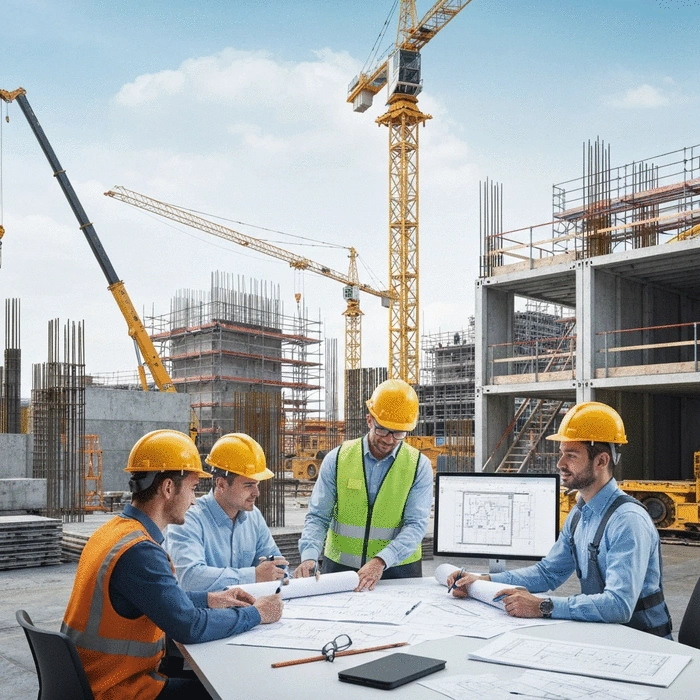
Artificial Intelligence (AI) is revolutionizing the construction industry. With its ability to enhance project management and efficiency, the construction landscape is rapidly evolving. How can efficient construction systems transform your next project?
What You Will Learn
Efficient construction systems streamline processes, reduce costs, and enhance quality by eliminating waste.
Lean construction maximizes value while minimizing waste, improving collaboration and project predictability.
Process optimization involves identifying non-value-added tasks and utilizing feedback loops for continuous improvement.
Prefabrication and modular construction significantly reduce construction time and enhance quality control.
Integrating Building Information Modeling (BIM) improves collaboration and reduces errors, leading to quicker project timelines.
AI-driven solutions enhance scheduling accuracy, reducing manual errors and allowing teams to focus on strategic planning.
Emerging technologies like robotics and AR/VR are transforming construction training and project execution, enhancing safety and efficiency.
The Pillars of Efficient Construction: A System Overview
Efficient construction systems drive modern building, emphasizing optimized processes, waste reduction, and enhanced project outcomes. The following visual highlights key methodologies and technological integrations that contribute to streamlined workflows and superior project delivery.
BIM: Enhanced Collaboration & Reduced Delays
Building Information Modeling (BIM) significantly improves project coordination by visualizing designs and identifying issues early. This leads to substantial reductions in construction delays.
30%Reduction in Construction Delays (BIM Projects)
Lean Construction: Waste Reduction
✓ Eliminates non-value tasks
✓ Just-in-time delivery
✓ Continuous improvement
Prefabrication & Modular: Efficiency Gains
✓ Reduced construction waste
✓ Faster project completion
✓ Consistent quality (factory)
AI & Automation: Project Optimization
✓ Improved scheduling accuracy
✓ Reduced manual errors
✓ Predictive analytics
AR/VR Training: Enhanced Safety
✓ Risk-free training environments
✓ Immediate performance feedback
✓ Improved worker preparedness
Understanding Efficient Construction Systems: Key Definitions and Concepts
Efficient construction systems are crucial for today's fast-paced building environment. They encompass various methodologies and practices designed to enhance productivity while minimizing waste. As someone deeply involved in the construction industry, I can attest to the fact that understanding these systems is essential for achieving superior outcomes on any project.
At Aluminium Formwork Online, we are dedicated to providing builders and contractors with the tools and knowledge necessary to implement these systems effectively. It’s not just about using advanced materials like aluminium formwork; it’s about adopting a holistic approach to construction that promotes efficiency at every stage.
Defining Efficient Construction Systems
What Are Efficient Construction Systems?
Efficient construction systems refer to methods and practices that streamline processes, reduce costs, and enhance the quality of construction projects. These systems prioritize the elimination of waste, whether that be time, materials, or labor. By leveraging innovative techniques, we can create workflows that are not only more effective but also more sustainable. For further insights into streamlining construction, explore 7 Proven Strategies to Streamline Construction.
Use of modern technologies to enhance planning and execution
Focus on sustainable practices to minimize environmental impact
Collaboration among project teams to ensure consistency and communication
As construction professionals, we must embrace these definitions to stay competitive and responsive to industry demands. The integration of efficient systems allows us to adapt to changing project requirements with ease.
Overview of Lean Construction and Its Benefits
Lean construction is a key methodology within the realm of efficient construction systems. It emphasizes maximizing value and minimizing waste throughout the construction process. The benefits of lean construction include enhanced collaboration, increased flexibility, and reduced lead times, resulting in projects that come in on time and under budget.
Improved communication among team members
Increased project predictability
Reduction of rework and associated costs
By employing lean principles, we can foster a culture of continuous improvement, which ultimately leads to higher-quality outcomes for our clients. At Aluminium Formwork Online, we encourage construction teams to consider how these principles can transform their workflows.
Importance of Process Optimization in Construction
How Lean Construction Reduces Waste
One of the most significant advantages of lean construction is its ability to reduce waste. Waste can take many forms, from excess material usage to unnecessary steps in the workflow. By focusing on value-added activities, we can streamline our processes and allocate resources more effectively. The Minnesota Department of Transportation provides valuable perspectives on lean construction practices and their benefits.
Identifying and eliminating non-value-added tasks
Implementing just-in-time delivery methods
Utilizing feedback loops for continuous process improvement
As I’ve seen in my own projects, embracing lean construction strategies not only enhances efficiency but also leads to significant cost savings over time. It's a win-win situation for everyone involved!
Streamlining Workflow for Enhanced Productivity
Streamlining workflows is a vital aspect of optimizing construction processes. Efficient workflows minimize downtime and ensure that all team members are working towards the same goals. Using tools like Aluminium Formwork Online enables teams to plan effectively and collaborate efficiently.
Establishing clear roles and responsibilities
Utilizing project management software for real-time updates
Encouraging proactive problem-solving among team members
By focusing on these elements, we can create a productive environment that fosters innovation and collaboration. It's all about enhancing how we work together!
Exploring Prefabrication and Modular Construction
Benefits of Prefabrication in Construction Efficiency
Prefabrication is becoming a game-changer in the construction industry, allowing components to be manufactured off-site before being assembled on-site. This approach significantly reduces construction time and enhances quality control. Prefabrication is not just about speed; it’s also about precision and sustainability.
Reduced construction waste and improved site safety
Consistent quality due to factory-controlled conditions
Faster project completion times, leading to quicker occupancy
At Aluminium Formwork Online, I advocate for the adoption of prefabrication techniques as they align perfectly with our mission to enhance efficiency in construction.
Modular Construction: A Cost-Effective Approach to Building
Modular construction takes prefabrication a step further by utilizing pre-built sections or modules that can be assembled on-site. This method offers increased cost-effectiveness and flexibility. It's a viable alternative for various project types, allowing for scalability without compromising quality.
Quick assembly and reduced labor costs
Enhanced design flexibility with customizable modules
Lower environmental impact through minimized site disruption
The shift towards modular construction reflects our evolving industry, where efficiency and sustainability are paramount. As we continue to explore new methods, let’s embrace the potential these innovative approaches offer to revolutionize our projects!
Interactive Poll
As we explore the importance of efficient construction systems, we want to know your thoughts! Which method do you believe has the most potential to revolutionize the construction industry?
Integrating Technology for Greater Efficiency
In today's fast-paced construction environment, integrating technology is crucial for achieving greater efficiency. This is where tools like Building Information Modeling (BIM) come into play. As a construction engineer, I've seen firsthand how these technologies facilitate collaboration among teams, streamline processes, and minimize errors on-site. But how exactly does BIM enhance our construction workflows?
The Role of Building Information Modeling (BIM)
How BIM Enhances Collaboration and Reduces Errors
BIM serves as a digital representation of the physical and functional characteristics of a project. It creates a shared knowledge resource for all stakeholders, enabling better communication and coordination. By visualizing the project before the actual construction begins, teams can identify potential issues early on, which significantly reduces costly errors. The National Institute of Building Sciences (NIBS) provides comprehensive guidelines and resources for BIM implementation.
Improved visualization of design elements
Enhanced communication among architects, engineers, and contractors
Streamlined project updates and modifications
These benefits lead to less rework and quicker project timelines, ultimately enhancing the overall efficiency of our construction endeavors. In my experience, incorporating BIM into the planning stages has resulted in smoother transitions from design to execution, making it a fundamental tool in modern construction.
Case Studies: BIM in Action on Construction Sites
There are numerous case studies that highlight the effectiveness of BIM in construction projects. For instance, a recent project I worked on utilized BIM to coordinate complex structural elements. As a result, we achieved a 30% reduction in construction delays compared to similar projects that did not use BIM. Here are a few notable outcomes from BIM adoption:
Increased project delivery speed
Reduced material waste through precise quantity take-offs
Enhanced safety through better planning and visualization
Such results demonstrate the transformative impact of BIM on the construction landscape, paving the way for future innovations in our field!
Artificial Intelligence and Scheduling Tools
AI-Driven Solutions for Project Management
Artificial Intelligence (AI) is another game changer in our industry. Through AI-driven solutions, we can enhance project management and streamline scheduling processes. These tools analyze data and predict potential delays, allowing teams to make proactive adjustments. I've personally implemented AI scheduling tools in my projects, and the results were impressive:
Improved accuracy in project timelines
Reduction of manual scheduling errors
Increased focus on strategic planning and execution
Utilizing AI not only saves time but also empowers teams to focus on delivering high-quality results. By leveraging these tools, we can optimize our workflows and ensure that projects stay on track.
Real-World Applications of AI in Construction Efficiency
Many construction companies are now embracing AI solutions. For example, AI algorithms can analyze historical data to improve future project estimates and schedules. This predictive capability can lead to substantial cost savings and better resource management. I've seen how these advancements can enhance our operations, allowing us to complete projects more efficiently while maintaining a high standard of quality!
Predictive analytics for budgeting and resource allocation
Real-time data tracking and reporting
Automated task assignments based on team availability
As AI continues to evolve, I believe we'll see even more innovative applications that will further enhance our construction efficiency.
Emerging Technologies in Construction Innovation
Exploring Construction Automation and Robotics
Construction automation and robotics are emerging as vital components of efficient systems. These technologies can assist in repetitive tasks, reduce labor costs, and minimize human error. For instance, robots can handle tasks like bricklaying or concrete pouring, allowing our skilled workers to focus on more complex challenges.
Increased precision in repetitive tasks
Improved safety by reducing the risk of injuries
Enhanced project speed without compromising quality
In my view, integrating robotics into our workflows is an exciting opportunity that can revolutionize how we approach construction projects!
How AR and VR Technologies Enhance Construction Training
Augmented Reality (AR) and Virtual Reality (VR) are also becoming essential tools in construction training. These technologies provide immersive experiences that help workers visualize complex tasks in a risk-free environment. By simulating real-world scenarios, we can enhance training effectiveness and boost worker confidence on-site.
Safe environments for hands-on training
Immediate feedback and performance analysis
Increased retention of training materials
From my experience, utilizing AR and VR for training has significantly improved worker preparedness, leading to smoother project execution and higher safety standards on-site.
Frequently Asked Questions (FAQs) about Efficient Construction Systems
Q1: What are the main goals of efficient construction systems?
Efficient construction systems aim to streamline processes, reduce costs, enhance project quality, and minimize waste in terms of time, materials, and labor.
Q2: How does Lean Construction contribute to efficiency?
Lean Construction maximizes value and minimizes waste throughout the construction process by eliminating non-value-added tasks, implementing just-in-time delivery, and fostering continuous improvement.
Q3: What are the benefits of prefabrication and modular construction?
Prefabrication and modular construction reduce construction waste, improve site safety, ensure consistent quality due to factory-controlled conditions, and lead to faster project completion times.
Q4: How does Building Information Modeling (BIM) improve project outcomes?
BIM enhances collaboration by providing a shared knowledge resource for all stakeholders, allowing for early identification of issues, improved visualization, streamlined updates, and significant reductions in construction delays and errors.
Q5: What role does AI play in construction project management?
AI-driven solutions enhance project management by improving scheduling accuracy, reducing manual errors, providing predictive analytics for budgeting and resource allocation, and enabling teams to focus on strategic planning.
Q6: How do emerging technologies like AR/VR and robotics impact construction?
Robotics and automation increase precision, improve safety, and enhance project speed for repetitive tasks. AR/VR technologies provide risk-free immersive training environments, leading to improved worker preparedness and higher safety standards on-site.
Recap of Key Points
Here is a quick recap of the important points discussed in the article:
Efficient construction systems streamline processes, reduce costs, and enhance quality.
Lean construction maximizes value while minimizing waste, leading to increased collaboration and flexibility.
Process optimization is vital for eliminating non-value-added tasks and improving resource allocation.
Prefabrication and modular construction significantly reduce waste and enhance project efficiency.
Integrating technology, such as BIM and AI, enhances collaboration, accuracy, and overall efficiency in construction projects.
Emerging technologies like construction automation and AR/VR tools are revolutionizing training and project execution in the construction industry.
Your go-to resource for mastering aluminium formwork systems. We help builders, contractors, and engineers with technically sound guidance and practical insights for superior project outcomes.
Trusted by industry professionals, our mission is to provide reliable, easy-to-follow insights backed by extensive engineering expertise and modern construction standards.